
Quick answer: A floating (wall-hung) vanity suits smaller bathrooms and modern aesthetics. It creates a sense of space and can be set at custom heights. A freestanding vanity suits traditional spaces or any bathroom where storage is a priority. Both styles are available in solid timber, and the right choice usually comes down to your wall structure, storage needs, and the feel you want to create.
-
When you're planning a bathroom renovation, the vanity is one of the most consequential decisions you'll make. It anchors the room's look and carries the daily wear of a busy household, so it's worth taking the time to understand what each style actually offers - not just aesthetically, but structurally and practically.
Here's what we see most often when our customers come into our showroom in person in Melbourne, or virtually from Sydney, Brisbane, Canberra and beyond to compare the two.
What is a floating bathroom vanity, and is it right for your space?
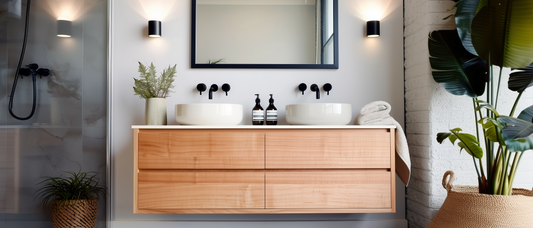
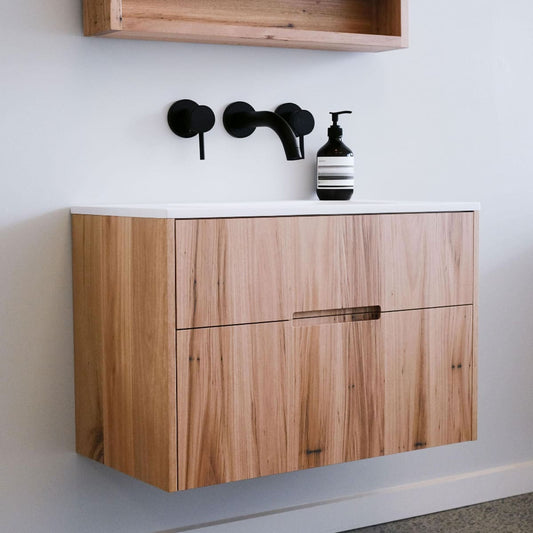
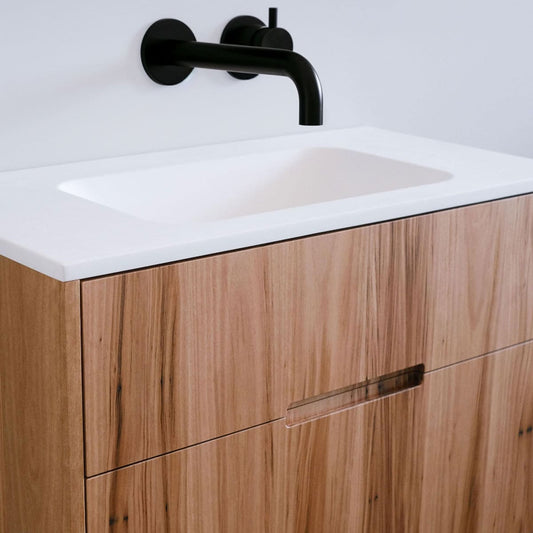
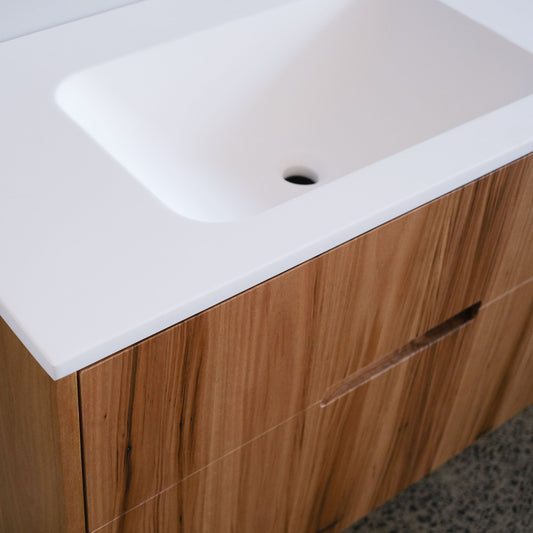
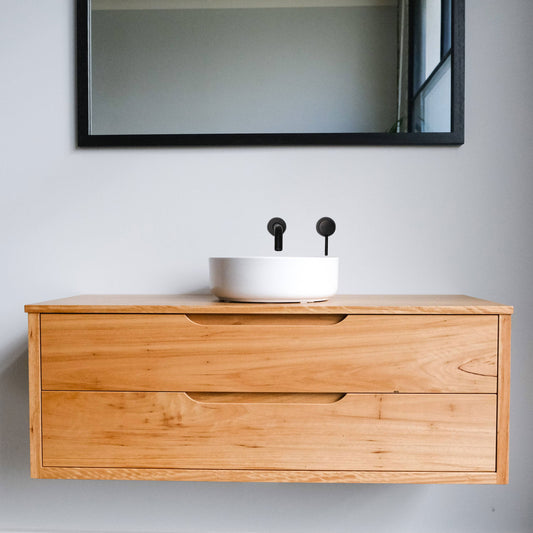
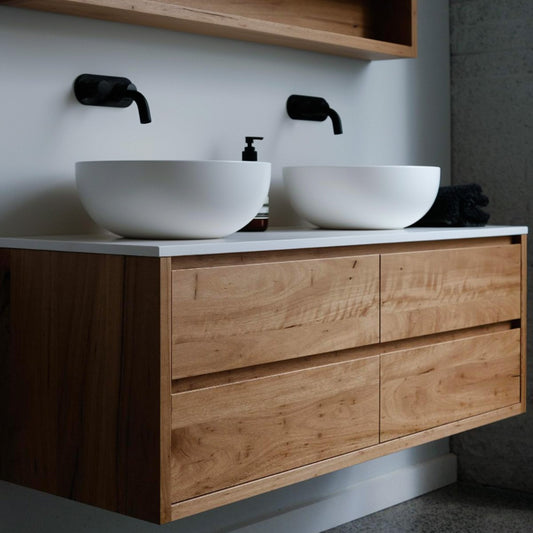
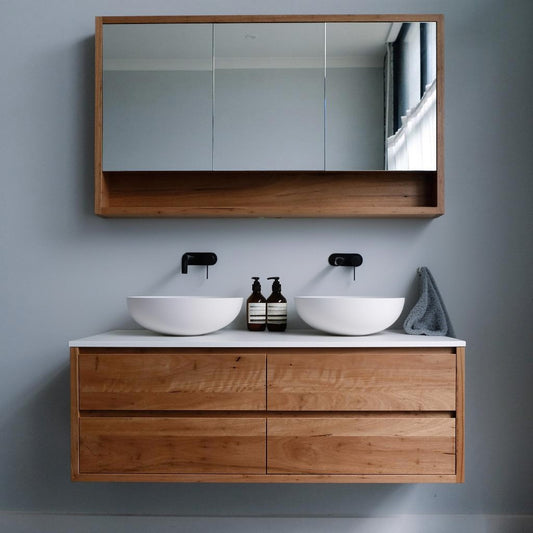
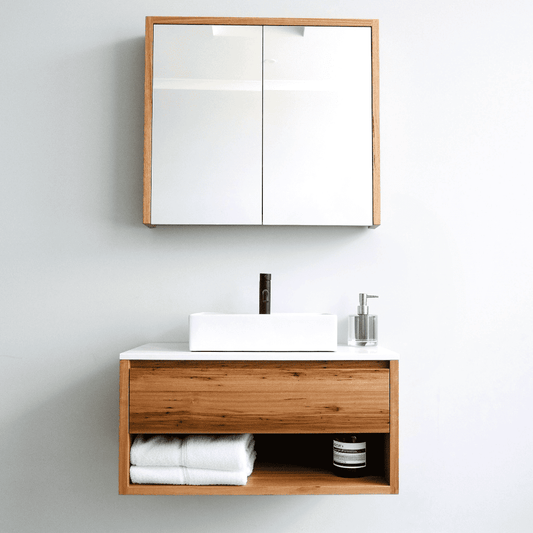
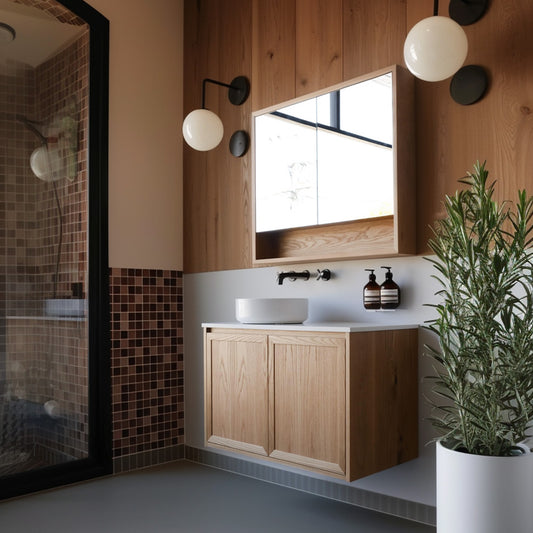
A floating bathroom vanit - also called a wall-hung vanity - is mounted directly to the wall with no legs or base touching the floor. The effect is clean and contemporary: the floor reads as continuous beneath it, which makes the room feel larger than it is.
This is particularly useful in ensuite bathrooms and smaller main bathrooms, where every visual trick helps. Because the height isn't fixed, wall-hung vanities can also be installed at a custom height, which can be a real advantage for taller users, for households with mixed accessibility needs, or if you're simply tired of tiptoeing or hunching over to use a standard-height basin.
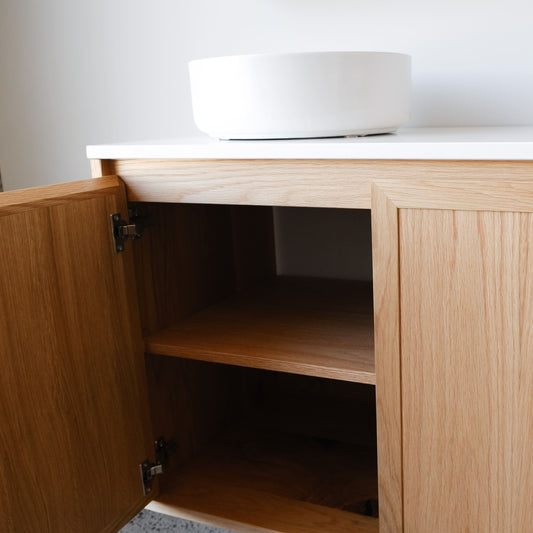
The practical consideration is wall structure. A floating vanity needs adequate support behind the wall lining (typically a solid timber or steel backing frame), and your plumbing will need to be run through the wall rather than up from the floor. This is worth confirming with your builder early in the renovation process. That said, it is a standard requirement that experienced tradespeople handle regularly.
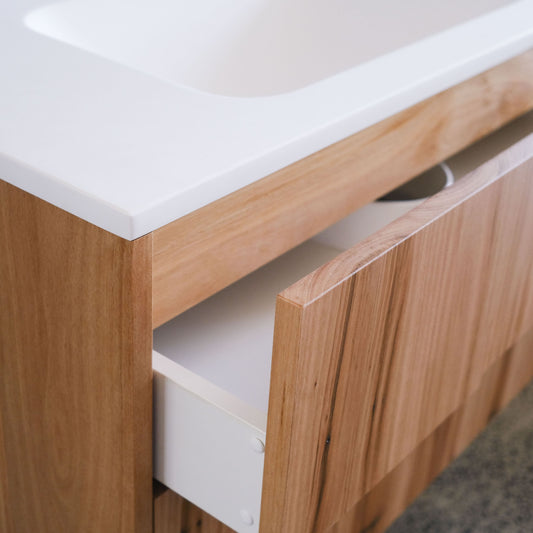
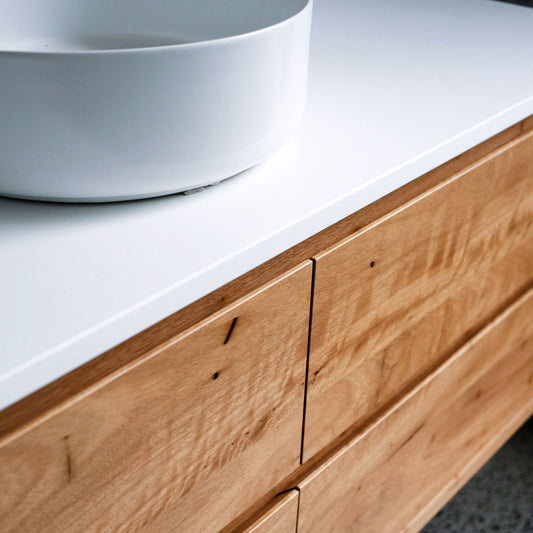
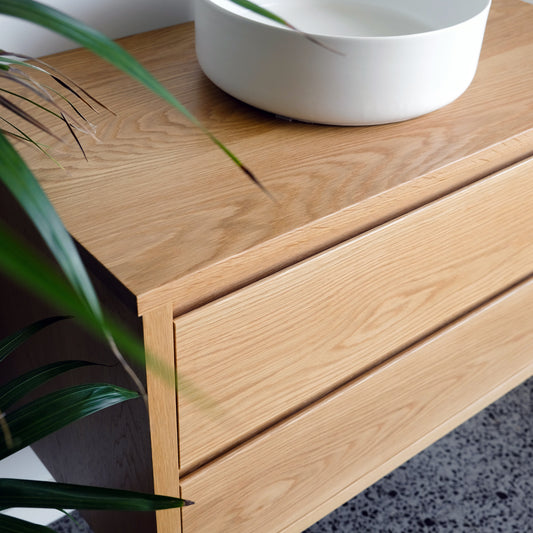
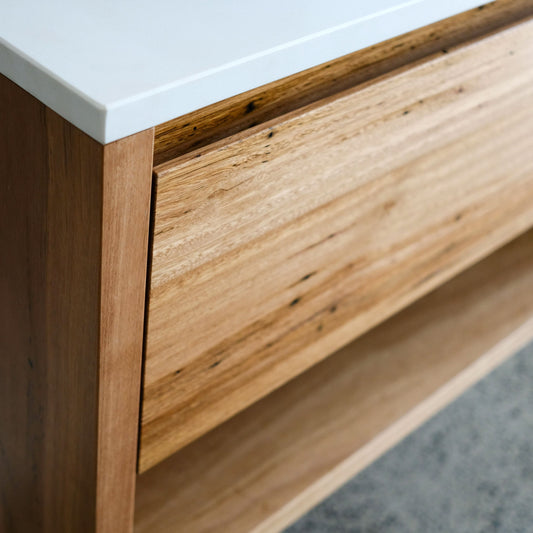
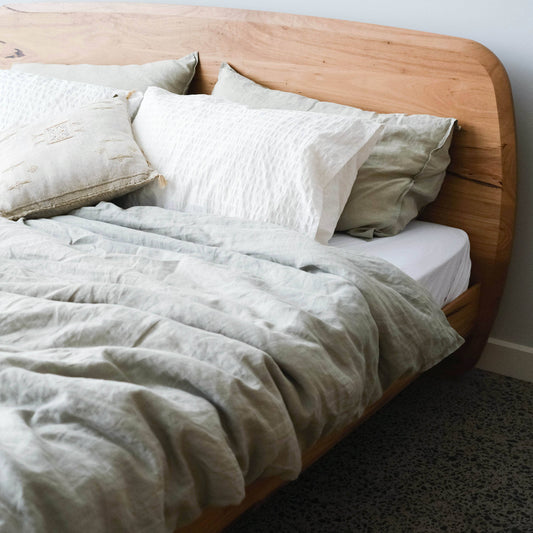
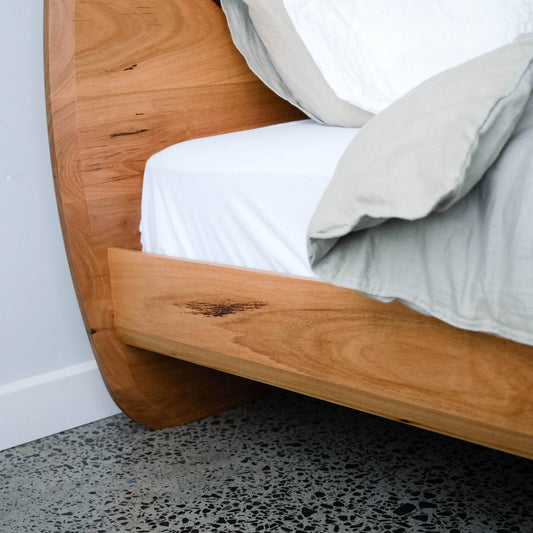
In terms of materials, solid timber performs exceptionally well in a wall-hung format. The weight is manageable, the joinery holds firmly, and a well-finished timber surface - properly sealed and maintained - handles the humidity of a bathroom environment over the long term.
What are the advantages of a freestanding vanity?
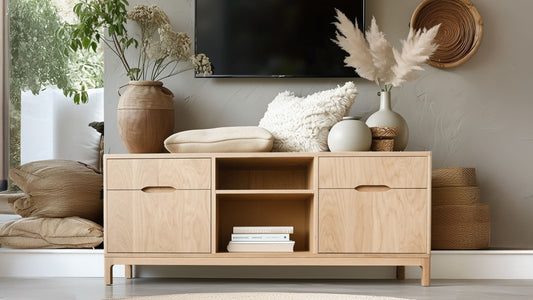
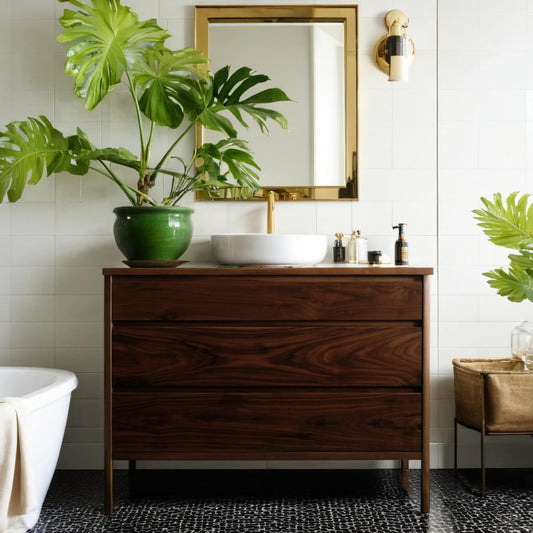
Freestanding vanities sit directly on the floor and may be plumbed from below, which means installation is generally more straightforward and the requirements on your wall structure are minimal. They're a practical choice when you're renovating on a tighter timeline or when the existing plumbing isn't positioned for an in-wall configuration.
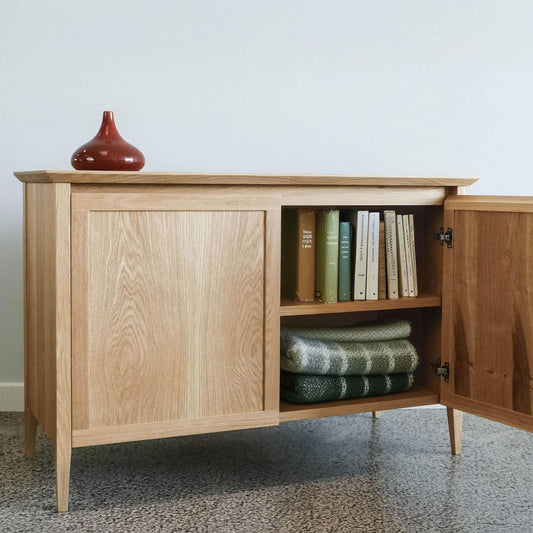
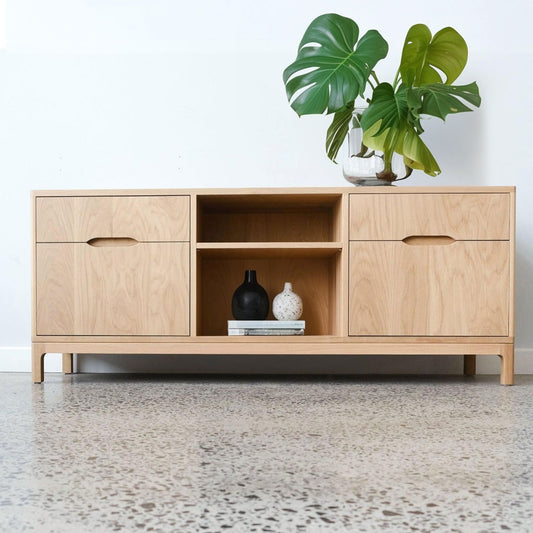
Storage is where freestanding vanities genuinely have an edge. A full-height cabinet with doors and drawers can accommodate considerably more than the shallower profile of a wall-hung unit. This is useful for bathrooms doing heavy lifting for a family, or if you simply want everything out of sight.
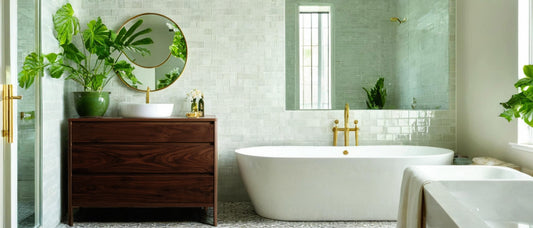
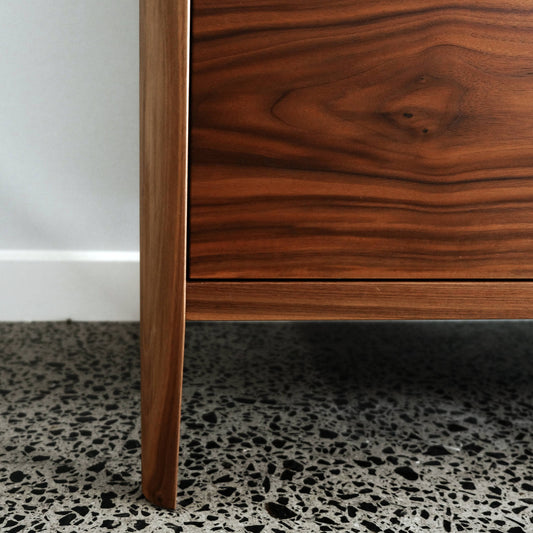
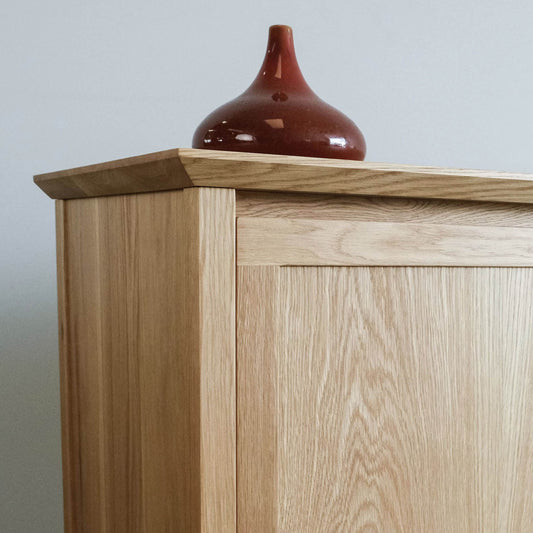
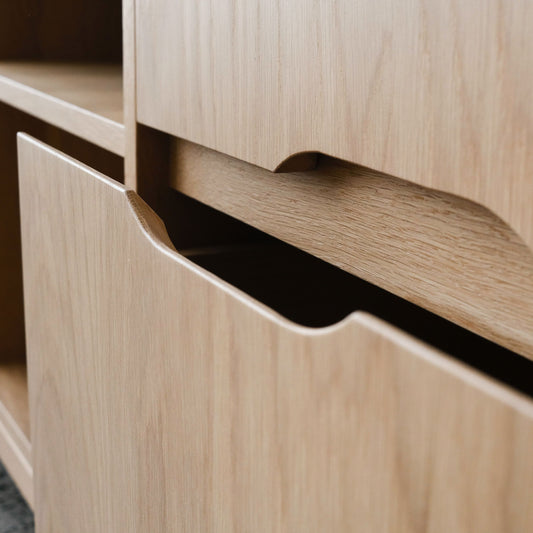
Stylistically, freestanding vanities sit naturally in traditional and transitional bathrooms. Timber is particularly well-suited here: a solid American oak or walnut vanity in a classic modern design brings warmth and character. The joinery and organic feature of the timber become part of the room rather than just a functional, boring box.
Freestanding vanities also offer some flexibility in placement where you are not locked in to wall structures that can support, or fixed plumbing positions. You may have more options for where the vanity sits within the room.
What timber is best for a bathroom vanity?
This is one of the most common questions we field, and the honest answer is that timber species matters less than how the piece is finished and maintained. That said, some timbers are better suited to bathroom environments than others.
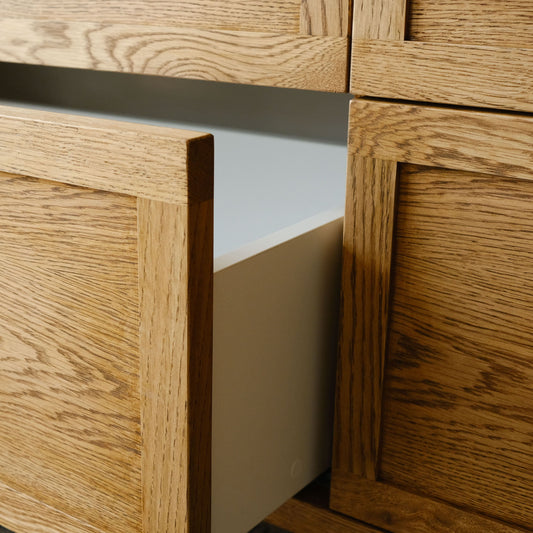
American oak is a reliable choice. It has a consistent, moderately open grain that takes a quality hardwax oil or lacquer finish well, and its natural colour sits anywhere from warm cream to honey-brown depending on the batch. It's the most popular option we see in coastal Sydney, Queensland and Victorian client homes.
Walnut has become increasingly sought-after for bathrooms. The darker, richer tones work beautifully against stone or concrete benchtops, and the tight grain handles moisture exposure very well when properly sealed. It's a premium choice that tends to age gracefully rather than show wear.
Tasmanian oak offers a truly Australian, yet lighter, more contemporary look and is a strong option if you're working with a limited budget without wanting to compromise on solid timber quality.
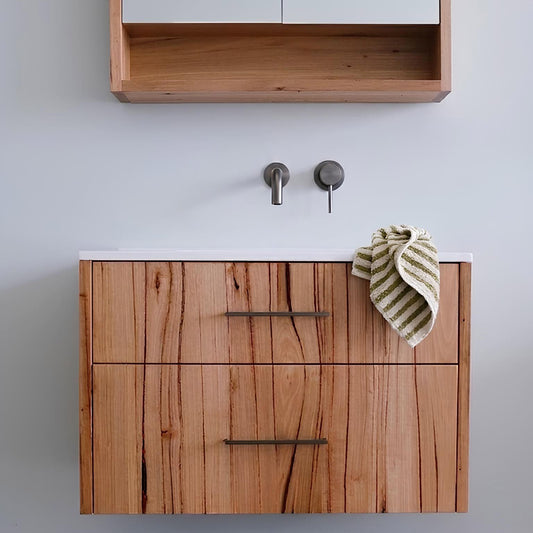
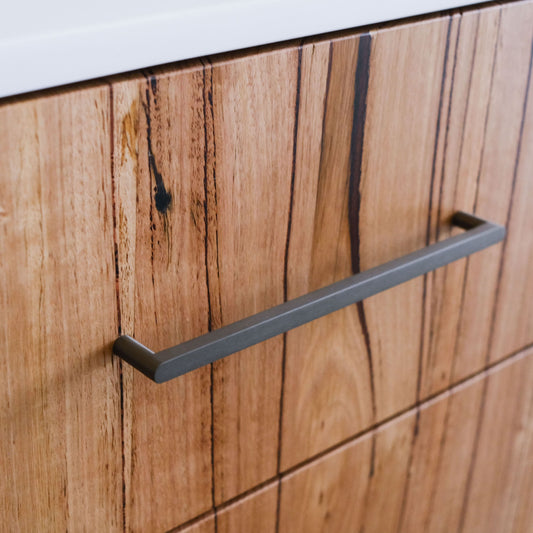
Recycled timber remains our stand-out in our client's homes across Melbourne, Sydney, Brisbane, Canberra and beyond. Largely made out of a unique eucalypt varieties, these hardwood timbers are reclaimed from homes and factories, and carry unique stories they tell through every nail and bolt hole they've collected over decades.
All of our vanities are available in your choice of timber species, and we can also work to custom dimensions if your space has particular requirements. Read more about our timber options →
Which style suits your bathroom renovation?
The best way to think about this is less as an aesthetic choice and more as a structural and practical one. Start with your wall: if you have or can build in the right supporting structure, a floating bathroom vanity opens up the space and gives you height flexibility. If your plumbing is floor-mounted and you have limited appetite for wall work, a freestanding unit is the more straightforward path and will serve you well for decades.
Storage requirements are the second question. If you're fitting out a family bathroom where the vanity needs to hold everything from towels to a hairdryer, a freestanding unit with full-height cabinetry is likely the better investment. If it's an ensuite with a separate linen cupboard taking care of storage, the cleaner profile of a floating vanity makes more sense.
Style should follow from those two answers, not lead them. Both can be executed beautifully in solid timber, and both will carry a 10-year structural warranty when you purchase through us.
Frequently asked questions
Do I need to reinforce my bathroom wall for a floating vanity?
In most cases, yes. The wall cavity behind the vanity needs a solid timber or steel backing frame to carry the load. A good builder will factor this into your renovation scope. It's worth confirming early rather than as an afterthought.
How do I care for a timber bathroom vanity?
The main rule is to keep standing water off the surface - wipe down around the basin after use, and make sure the silicone seal between the basin and the top is maintained. We recommend re-oiling solid timber bathroom vanities every 12–18 months depending on use, using a quality hardwax oil product. We're happy to advise on the right finish for your specific timber species. Read more about timber care →
Can I get a custom-sized vanity for an unusual bathroom layout?
Yes. All of our vanities are made to order in our Mordialloc workshop, so custom widths, depths, and configurations are a standard part of what we do. Lead time is typically 8-12 weeks from confirmation. Get in touch to start your custom vanity project →
Do you deliver bathroom vanities to Sydney and interstate?
We do. We offer flat rate standard delivery to Melbourne, Sydney, Canberra, and Brisbane. Read more about our delivery options here →
-
If you'd like to talk through what suits your specific renovation, book a showroom visit or get in touch with us directly. We work closely with homeowners across Melbourne, Sydney, Brisbane and beyond, and can help guide you through your renovation or build project as needed.